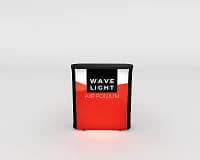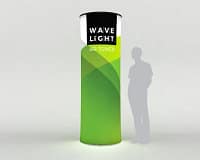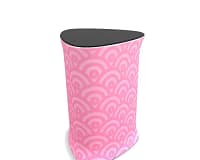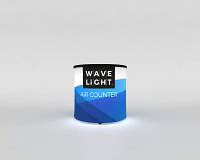
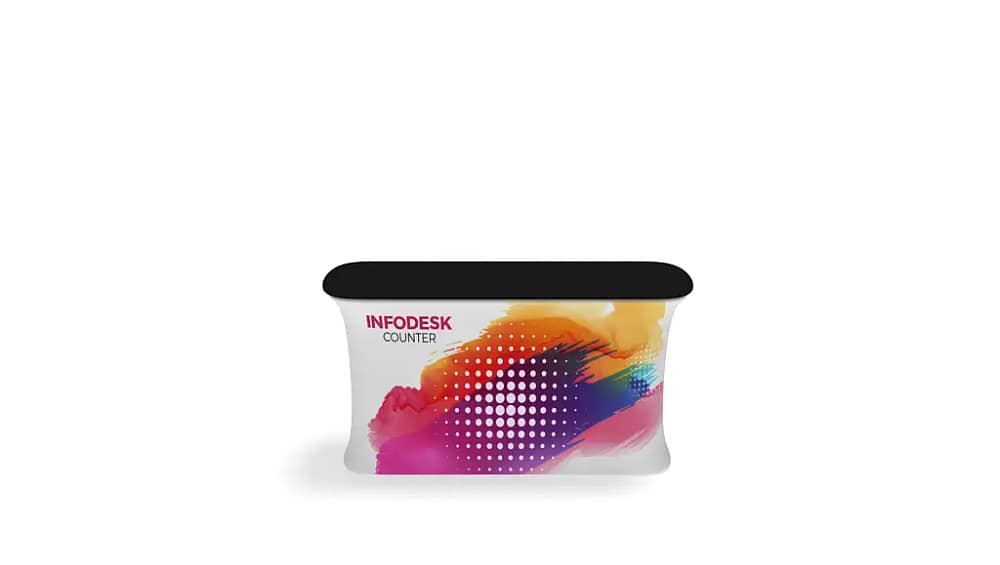
Many UK marketers rely on WaveLine® InfoDesks without fully understanding how their materials affect performance over time. Behind the smooth graphics and clean lines, the wrong construction choices can quietly create safety risks, mounting replacement costs and a weaker brand presence on the show floor. As venues tighten regulations and audiences become more sustainability‑conscious, ignoring what your counters are made of is no longer a minor oversight.
What WaveLine® InfoDesks are typically made of
Most portable information kiosks use a lightweight aluminium frame, a tension fabric graphic and an engineered timber countertop. On a specification sheet this can look reassuringly standard, yet details such as aluminium grade, fabric composition and edge sealing on MDF make a significant difference. Lower‑quality panels are more likely to swell, chip or delaminate during transport. Similarly, untested fabrics may not meet UK and European fire ratings, exposing exhibitors to last‑minute compliance issues at venues.
Why material quality matters more than many teams realise
Under exhibition lighting, every flaw in tension fabric display counters is amplified. Sagging cloth, creases across key messages or dull, inconsistent colour instantly undermine campaign impact. For marketing teams using reusable trade show counters across multiple events, stress on joints and connectors builds up quickly. Inferior alloys can warp after repeated assembly, turning once solid, lightweight modular counters into unstable risks that staff hesitate to lean on or use confidently with visitors.
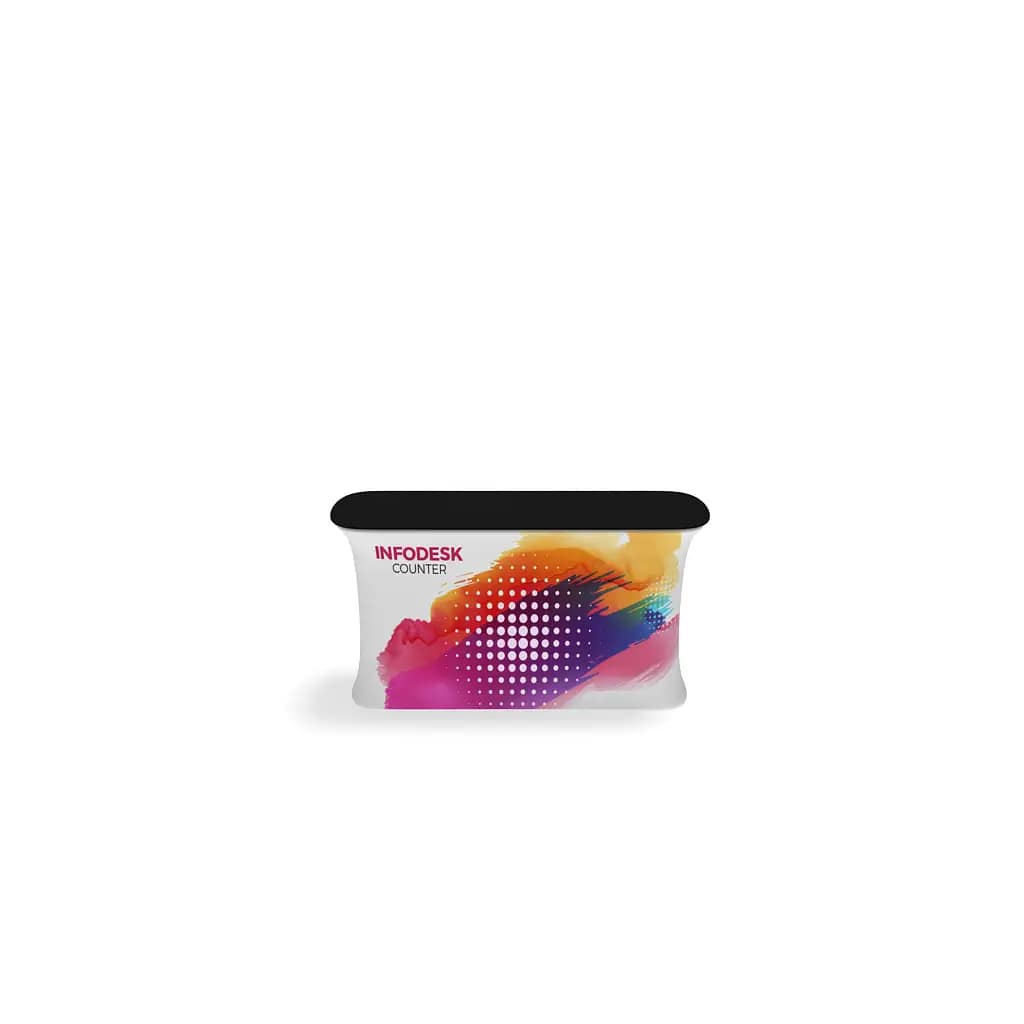
Warning signs your counter materials are failing
Several early clues point to trouble ahead with portable exhibition furniture. Fabric that no longer stretches cleanly around the frame, or graphics that appear washed out, usually indicate ageing inks or poor‑quality dye‑sublimation. At countertop level, raised edges, soft patches or visible bubbling hint that moisture has penetrated the core board. Wobble in tool-free event counters, even when assembled correctly, may signal metal fatigue or distorted connectors that are unlikely to survive another busy trade show.
- Counters that rock or twist when a laptop or literature rack is placed on top.
- Fabric sleeves that leave vertical ripples or horizontal creases after tensioning.
- Worktops showing chipped laminate, swollen corners or discoloured patches.
- Graphics no longer matching updated brand colours on other custom branded info desks.
- Frames that require extra force or improvised fixes, undermining so‑called modular display solutions.
For brands investing heavily in exhibitions, these issues go beyond cosmetic frustration. Worn or unstable customizable exhibition counters subtly signal neglect, clashing with messages of innovation or quality. In an era of tighter sustainability scrutiny, frequently discarding damaged tops or graphics also conflicts with environmental pledges. Assessing the construction of WaveLine® InfoDesks now can prevent costly emergency replacements and protect the credibility of your portable branded reception desk at future events.
If your team is unsure whether current counters still meet venue safety standards, brand requirements and lifecycle expectations, it may be time to review your mix of portable exhibition assets. A brief discussion with an experienced supplier can clarify whether your portable information kiosks remain fit for purpose or should be upgraded to more robust, compact promotional kiosks. Before your next show, consider booking a short materials audit or consultation so small weaknesses do not become expensive, public failures on a busy stand.