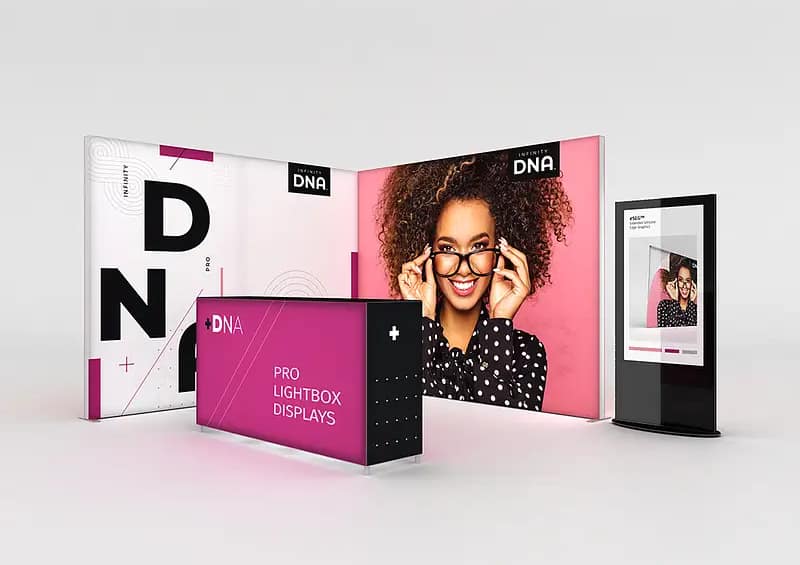
Infinity DNA™ Pro Lightboxes are engineered for impact, but what exactly goes into their construction? This guide breaks down the materials, technology, and design choices behind these premium illuminated displays.
What Are Infinity DNA™ Pro Lightboxes Made Of?
Infinity DNA™ Pro Lightboxes are typically built around high-grade aluminium profiles, advanced LED technology, and premium fabric graphics. The frame is usually an anodised or powder-coated aluminium extrusion, chosen for its strength-to-weight ratio, durability, and sleek finish ideal for retail and exhibition environments. Aluminium is also recyclable, supporting more sustainable display strategies and long-term brand programmes. Together, these elements create a robust LED lightbox display that looks refined while standing up to daily commercial use.
At the heart of each unit is a precision-specified LED engine. High-efficiency LEDs with a high colour rendering index, often 90+ CRI, ensure brand colours remain accurate and consistent under artificial light. LEDs are typically mounted on rigid bars or edge-lit modules that distribute light evenly across the graphic, minimising hotspots and shadowing. This balance of optics and engineering is what separates professional illuminated fabric displays from cheaper alternatives.
Material Choices That Shape Performance and Brand Experience
The visible face of the system is a tensioned fabric graphic, usually printed on polyester-based textiles using dye-sublimation or UV processes. SEG backlit graphics, finished with a silicone edge stitched around the perimeter, tuck neatly into the frame channel to create a near-frameless, premium look. This makes graphic changes fast and tool-free, ideal for retailers who regularly refresh campaigns or run multiple seasonal promotions across different locations.
Profile depth and construction play a crucial role in performance. Deeper profiles can house more powerful LEDs or double-sided graphics, perfect for window displays, high-traffic corridors, and modular LED exhibition stands. Slimline profiles, by contrast, suit space-conscious interiors such as boutiques or corporate reception areas while still delivering uniform illumination. Many brands now specify a reusable modular display system so the same frames can be reconfigured for new campaigns rather than replaced.
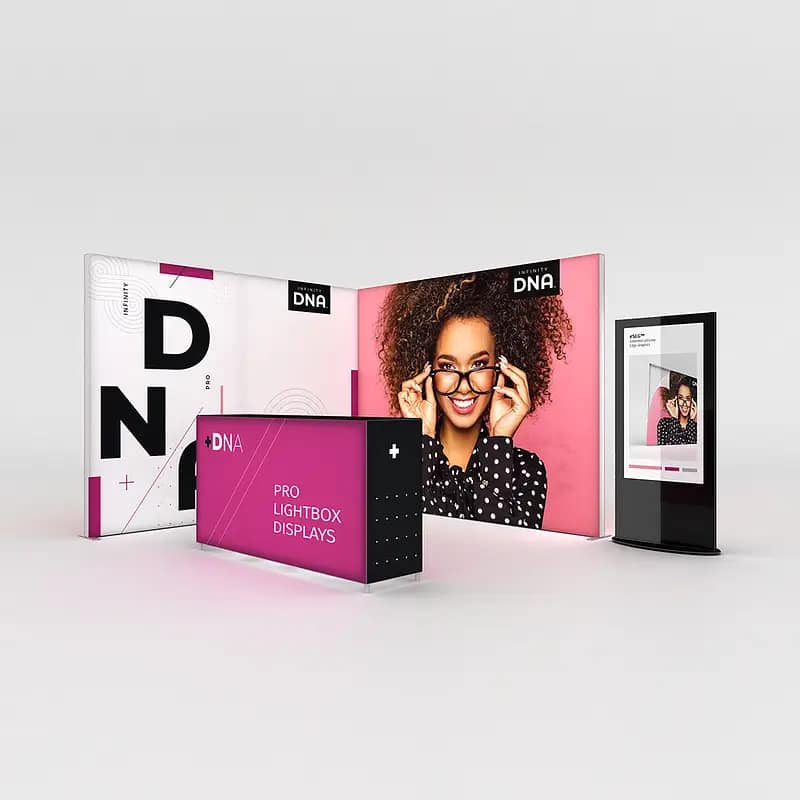
Fabric specification is equally important. Backlit textiles with carefully tuned translucency allow graphics to glow without washing out, while blockout fabrics in double-sided units prevent unwanted light bleed. For shopping centres, airports, and major venues, fire-retardant ratings and compliance with European or UK safety standards are non-negotiable. Sustainability is now part of the brief too, with aluminium frames designed for long-term re-use and energy-efficient LEDs supporting ESG and carbon-reduction targets.
- Clarify whether you need wall-mounted, freestanding, or hanging configurations for your space.
- Check LED specifications, including CRI, colour temperature, and expected lifetime, not just lumen output.
- Discuss textile options, from premium backlit fabric walls to more economical custom fabric banners.
- Look for tool-free exhibition lightbox frames that enable quick on-site assembly and graphic swaps.
- Ensure the system can scale into portable advertising solutions or lightweight trade show lightboxes if required.
How to Specify the Right Construction for Your Lightbox Project
When planning a new illuminated campaign, it pays to look beyond headline brightness claims and ask detailed questions about construction. Which aluminium profile system is being used, and will it support future expansion into portable illuminated branding or larger, more ambitious installs? How are power supplies concealed for a clean finish and safe cable management in busy public environments? These considerations help you protect both aesthetic quality and operational practicality.
You should also clarify fabric and printing options at briefing stage. Ask which textiles are recommended for backlit applications, how SEG edges are finished, and how easily graphics can be changed on-site by store teams. For multi-site retail roll-outs, consistent material specification ensures every Infinity DNA™ Pro Lightbox looks and performs the same, whether it is part of a flagship window or a regional in-store display. Partnering with a specialist manufacturer who understands both engineering and brand will help you strike the right balance between creativity, durability, and total cost of ownership.
Ready to explore the right specification for your next illuminated campaign? Book a consultation with our lightbox specialists today to discuss profiles, LEDs, and fabric options tailored to your brand environment, and turn your brief into a high-impact display strategy that works across every site.