How Different Hanging Banner Types Fit Unique Branding Requirements
Introduction
Hanging banners are a powerful category of exhibition signage that drive visibility and communicate brand identity from above the crowd. For exhibitors and event marketers, understanding the variety within this category helps you choose the banner types that deliver the greatest impact. Moreover, this guide explains how different hanging banner options match specific venue constraints, budget goals, and visual strategies.
General Information about Hanging Banner Products
Hanging banners range from single-sided printed panels to double-sided linen banners, circular and feather-shaped designs, and custom-cut silhouettes. In addition, sizes and suspension points vary to suit ceiling heights and rigging limitations. For a clear starting point, explore our full collection of Hanging banners designed for modern exhibition environments. Consequently, you can compare styles and materials to find the best match for your show.
Specifications and Material Quality
Specifications include printable area, fabric weight, finishing options, and recommended printing processes. Furthermore, common materials are blockout vinyl for bold color, polyester fabric for lightweight portability, and tension fabric for wrinkle-free presentation. Therefore, selecting the right material improves durability in transit and ensures consistent color under exhibition lighting.
Design Features and Visual Impact
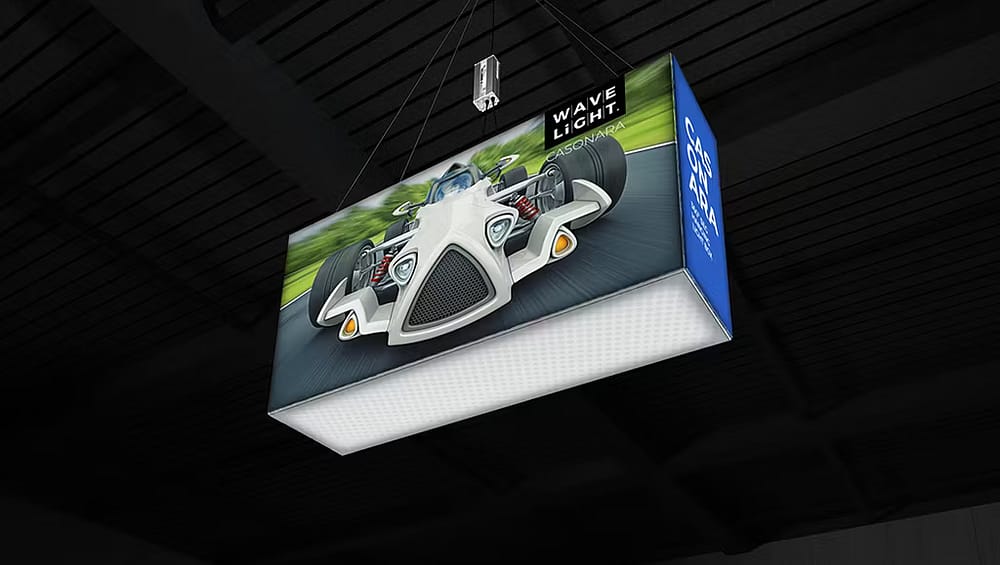
Different shapes and print finishes influence sightlines and dwell time. For example, circular and multi-tiered banners create 360 degree visibility above aisles, while long rectangular banners reinforce directional messaging. In addition, finishes such as matte or satin affect glare and readability. Consequently, design choices should align with branding and legibility goals to maximise visitor engagement.
Components and Setup Process
Hanging banners typically include a printed panel, hemmed edges with hanging points, and optional internal frames for tension. Moreover, grommets or sewn channels simplify rigging. For installation, follow venue rigging rules and prepare simple drop measurements so the team can hang graphics accurately. Therefore, a pre-event checklist reduces last-minute delays and keeps setup efficient.
Portability and Transport Considerations
Portability matters when you exhibit at multiple shows. Lightweight fabric banners pack into soft cases, while rigid panels require protective crates. In addition, consider modular systems that disassemble into compact components to reduce transport costs. Consequently, choosing portable options saves time and lowers shipping expenses over repeat events.
Primary Use Cases for Trade Shows and Events
Hanging banners are ideal for increasing brand visibility, marking meeting points, and guiding attendees to key areas. For example, tall vertical banners work well at large convention centers, while compact hanging signs are suited to smaller venues. Additionally, use double-sided prints where booths are visible from multiple directions to reinforce brand recall throughout the show floor.
Creative Uses of Multiple Products in the Category
Combine hanging banners with backdrops, pop-up displays, and floor decals to create layered branding that guides visitors and encourages interaction. For instance, pair a central circular banner with perimeter fabric panels to draw attention up and inward. Moreover, mixing materials and finishes can highlight product zones and differentiate sponsor areas, which increases perceived value and navigational clarity.
Conclusion: Choosing the Right Hanging Banner Strategy
In summary, selecting the right hanging banner type depends on venue constraints, visual priorities, and logistical needs. By considering specifications, materials, setup requirements, and creative combinations, you gain a flexible toolkit for consistent brand exposure. Finally, use this category-level approach to plan effective signage that improves visibility, supports attendee flow, and maximises your trade show investment.