Application Guide: Choosing the Most Suitable Hanging Banner for Your Campaign
Introduction
When planning an exhibition or trade show campaign, selecting the right hanging banner makes a measurable difference in visibility and brand impact. This guide explains the category of hanging banners, and therefore helps you choose options that match your venue, brand objectives, and budget. Furthermore, it highlights practical ways to combine multiple products for maximum effect.
General Information about Hanging Banners
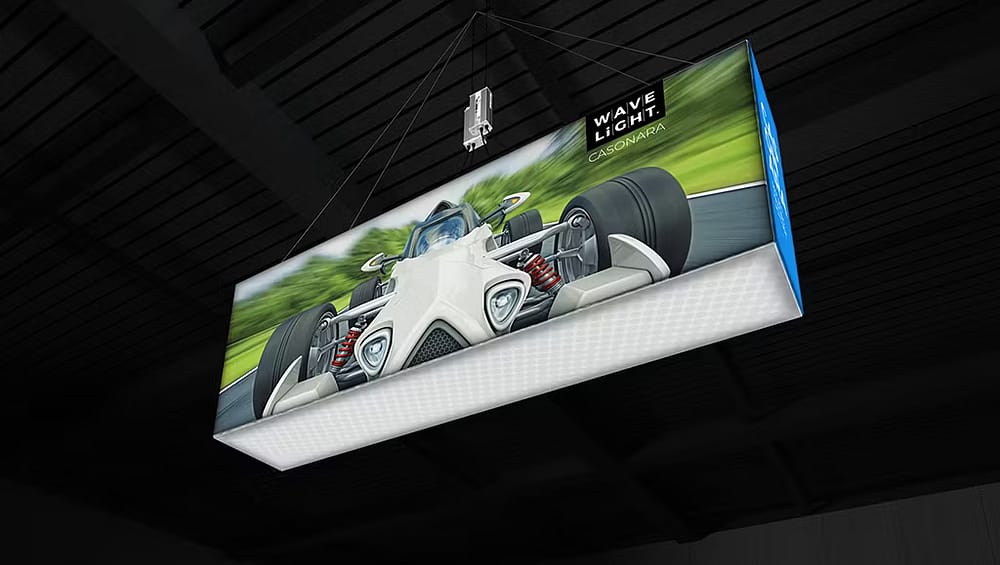
Hanging banners are suspended signage solutions designed to be seen from a distance, and they work well above stands, aisles, and open-floor event spaces. In addition, they reduce floor clutter while increasing sightline reach, and so they are ideal for busy exhibition halls. Moreover, the category includes simple single-sided drops, double-sided towers, and fully shaped suspended signs that attract attention from multiple directions.
Product Highlights and Range
Across the category you will find banners that differ in shape, size, and finish, and each option serves a specific role in a campaign. For quick selection and comparison, review product lines that highlight lightweight tension fabrics, rigid panels, and inflatable hanging signs. To explore shapes and sizes suited for your campaign, browse our complete range of Hanging banners which includes circle, oval, triangular, and rectangular configurations.
Specifications and Material Quality
Material choices directly influence print quality, durability, and transport costs. Therefore, typical materials include block-out fabric for saturated prints, PVC for rigid displays, and mesh options for venues with air flow requirements. Additionally, pay attention to finishing details such as internal frames, stitched hems, and reinforced eyelets because they determine longevity and ease of installation.
Design Considerations
Design impacts visibility, and consequently you should plan graphics for distance readability and brand consistency. For example, use bold headlines, high-contrast color palettes, and minimal text so visitors can process your message while walking. In addition, consider the banner’s orientation and height, and therefore create artwork files in the correct aspect ratio to avoid unwanted cropping.
Portability and Setup Process
Event teams require solutions that transport easily and install quickly. As a result, many hanging banners come with modular frames and soft carry cases, which reduce handling time. Meanwhile, some systems include quick-attach clips or magnetic fittings that speed up rigging, and consequently you benefit from lower labour costs and fewer setup delays.
Use Cases and Campaign Strategies
Hanging banners perform well as primary wayfinding, zone markers, and booth identifiers. For instance, place a circular overhead sign near intersections to guide visitors to your stand, or suspend a tall rectangular banner to advertise a headline product. Furthermore, combine overhead signage with floor stands and digital displays to create layered messaging that reinforces calls to action.
Creative Uses by Combining Products
Combining hanging banners with other display types multiplies their effect. For example, suspend a banner above a product demo area, and then use complementary pop-up stands at eye level to provide detailed information. In addition, match graphic themes across items so your messaging reads as a single, cohesive campaign from afar and up close.
Conclusion
Selecting the most suitable hanging banner requires balancing visibility, materials, and installation needs. Consequently, choose shapes and fabrics that align with your venue and audience, and therefore achieve stronger brand recall and easier wayfinding. In short, the hanging banner category offers versatile solutions that lift your campaign above the crowd while keeping setup simple and cost effective.