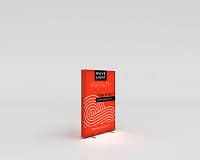
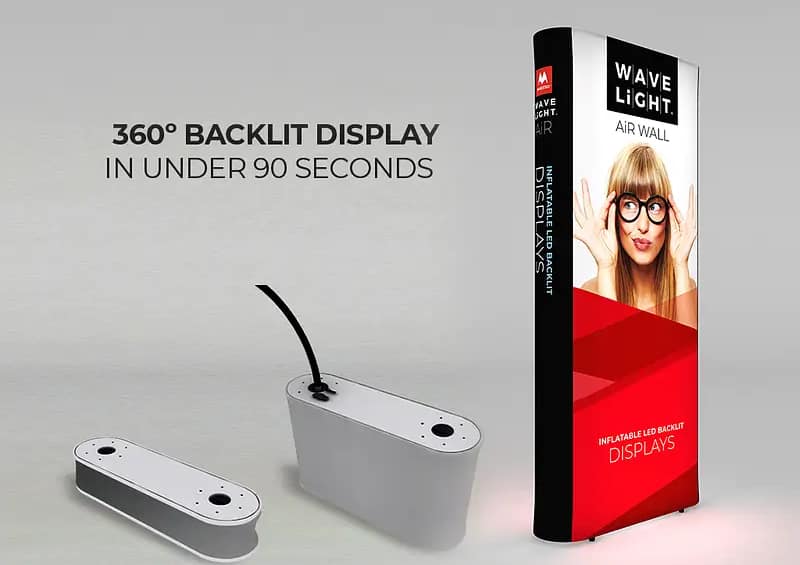
Transporting exhibition lightboxes between offices, storage and venues may feel routine, yet the risks hidden in every van journey are mounting for UK marketing and events teams. A WaveLight® Air Wall Lightbox combines an internal frame, LEDs, power supply and tension fabric graphics within an inflatable body, so one knock or crush can compromise several components at once. Industry freight handlers consistently rank illuminated display solutions and AV kit among the most frequently damaged items, often thanks to rushed pack-downs, tight build schedules and generic courier services treating them like ordinary luggage.
Why transporting WaveLight® Air Wall Lightboxes is riskier than it looks
On paper, inflatable lightbox displays appear tougher than traditional rigid systems, but their very convenience can encourage complacency. Valves, seams, integrated LED strips and plug connections all sit close together, meaning any impact or twist in transit can have a cascading effect. Cases dragged over kerbs, stacked under heavier crates or exposed to prolonged heat in vans can weaken the structure long before it fails visibly. For brands relying on portable advertising signage to create instant impact, this slow, unseen damage is a serious vulnerability.
The real cost of transport damage for exhibitors
When a lightbox fails on-site, the damage goes well beyond a repair bill. Exhibitors invest heavily in floor space, stand design and pre-show promotion, yet arrive to find their hero unit flickering, leaning or refusing to inflate. UK exhibition organisers note that visitors form impressions within seconds, with trade show lighting displays and branding heavily influencing dwell time. A dark corner where a glowing wall should be undermines credibility, disrupts product storytelling and can cut lead generation at precisely the moment marketing spend is at its peak.
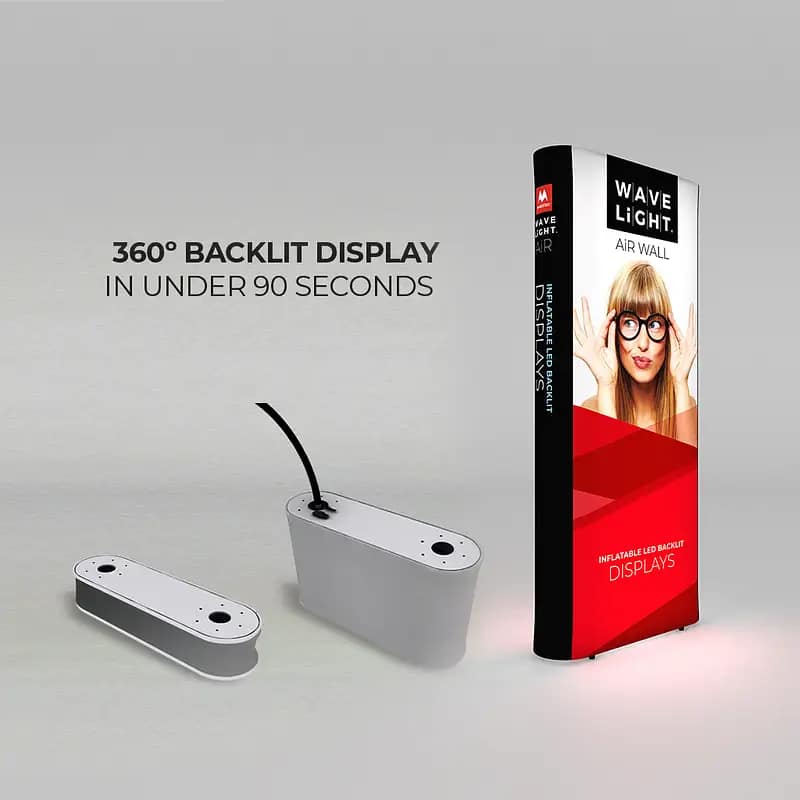
Common weak points you might be overlooking
Repeated loading and unloading exposes valves, seams and zips to constant abrasion, particularly where lightweight promo signage is squeezed into undersized cases. Internal LED runs and transformers can suffer from cable strain, while tension fabric graphics pick up creases, scuffs and faint abrasion lines that only appear under show lighting. Moisture during rainy load-ins or condensation in unventilated vehicles can seep into electronics and fabric coatings. Over several events, these minor knocks aggregate into complete failure, often midway through a busy show day.
- Carry cases or bags developing tears, crushed corners, warped panels or broken zips after each event.
- Cables, pumps and transformers travelling loose instead of in clearly labelled compartments or boxes.
- Graphics arriving with new creases, surface marks or subtle scratches across custom fabric lightboxes.
- Last-minute courier bookings without fragile-handling notes or confirmation of upright transport.
- Staff learning to pack on the day, with no written checklist, no photos of correct layouts and no formal sign-off.
Misconceptions compound the problem. Many teams assume that because these are inflatable lightbox displays, they will simply bounce off impacts. In reality, the internal electronics are as sensitive as any uk exhibition lightbox systems, and repeated jolts gradually loosen fittings. Others trust that “it survived the last show, so our process is fine”, ignoring micro-cracks and fabric fatigue. Without a documented handling method, even well-designed portable illuminated backdrops are at the mercy of whoever happens to be on duty at close.
The pattern is clear: under pressure, events teams prioritise speed over protection, leaving reusable event branding exposed to unnecessary risk. Establishing basic packing protocols, investing in fit-for-purpose cases and identifying a trained “owner” for each WaveLight® Air Wall Lightbox can dramatically cut failures. If the warning signs above feel familiar, now is the moment to audit how you move, store and check your seg fabric display walls before the next show. Take time this week to walk through your current process, spot weak points and speak with a specialist for tailored guidance, rather than waiting for a high-profile breakdown on the exhibition floor.