
Understanding the Materials Used in Waveline Media Banners
For UK marketers, the real performance of Waveline Media Banners is often determined less by design and more by what sits beneath the surface. When exhibition budgets are squeezed, it is tempting to treat these systems as interchangeable, focusing on artwork and a low unit price. Yet the wrong fabric, print process or frame alloy can quietly undermine campaigns. Poorly specified materials are a hidden risk that only becomes obvious under harsh venue lighting, tight event schedules and repeated transport.
Why banner material choice matters
Material quality has a direct impact on colour vibrancy, structural stability and lifespan. Dye-sublimated polyester in the right weight and weave can produce high-quality promotional graphics that stay sharp from one event to the next. In contrast, thin fabrics and basic print methods often struggle under bright spotlights and frequent handling. For brands relying on portable fabric display stands, early fading, creasing or sagging quickly erodes professionalism and trust. The result is a quiet leak in ROI across multiple shows.
Key components of modern fabric systems
Most UK trade show display solutions pair a printed fabric skin with an aluminium tube frame. On paper, many products look similar, yet specifications differ sharply in fabric tension banner systems. Variables such as polyester grade, denier, stretch characteristics and coating determine how well the graphic tensions, resists creasing and reproduces corporate colours. Likewise, frame wall thickness, connector engineering and base design influence stability, especially for lightweight exhibition backdrops on uneven floors or in high-traffic aisles.
Common warning signs you have the wrong materials
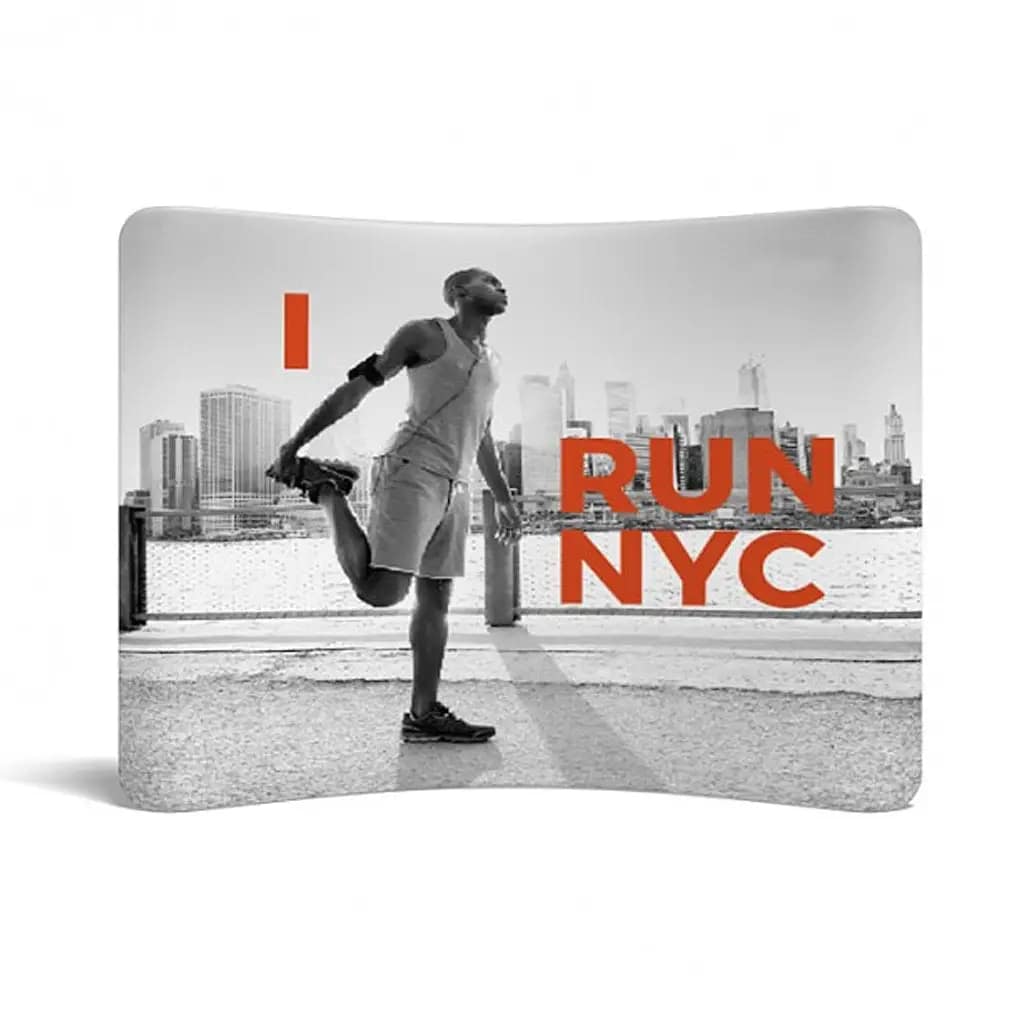
Tell-tale problems usually surface on the show floor rather than in the brochure. Graphics that appear washed out or inconsistent under LEDs often stem from lower-grade polyester or shortcuts in dye-sublimation. Persistent ripples, sagging corners or seams that refuse to sit flat can indicate underweight fabric or a frame lacking rigidity. Wobbly portable trade show banners and scuffed branded exhibition graphics after only a few outings point to metals and finishes chosen for price, not endurance. These are early indicators your specification is working against you.
- Muted or inconsistent colours that do not match brand guidelines under exhibition lighting.
- Obvious creases that fail to relax, even after tensioning or steaming before the event.
- Frames that twist, rock or need makeshift packing to stand level on venue floors.
- Fabric edges that fray, snag or show abrasion around high-contact frame points.
- Struggling to assemble modular trade show displays without forcing or misaligning joints.
Ignoring these symptoms can turn supposedly reusable event branding into a disposable asset. Organisations planning custom fabric displays or seamless printed backwalls for multi-stop campaigns risk escalating replacement costs, rush reprints and inconsistent brand presentation. By contrast, carefully chosen Waveline Media Banners, built with robust aluminium and correctly specified polyester, can deliver dependable, reusable impact across tours. Before your next programme, review product sheets, query fabric weight and frame construction, and consider speaking with a specialist in portable trade show banners to ensure your investment will endure. Assess your current display stock now and, if these red flags sound familiar, book expert guidance before another event exposes the same flaws.