Main Use Cases: Why Hanging Banners Remain Essential for Overhead Marketing
General Information: What Hanging Banners Offer Exhibitors
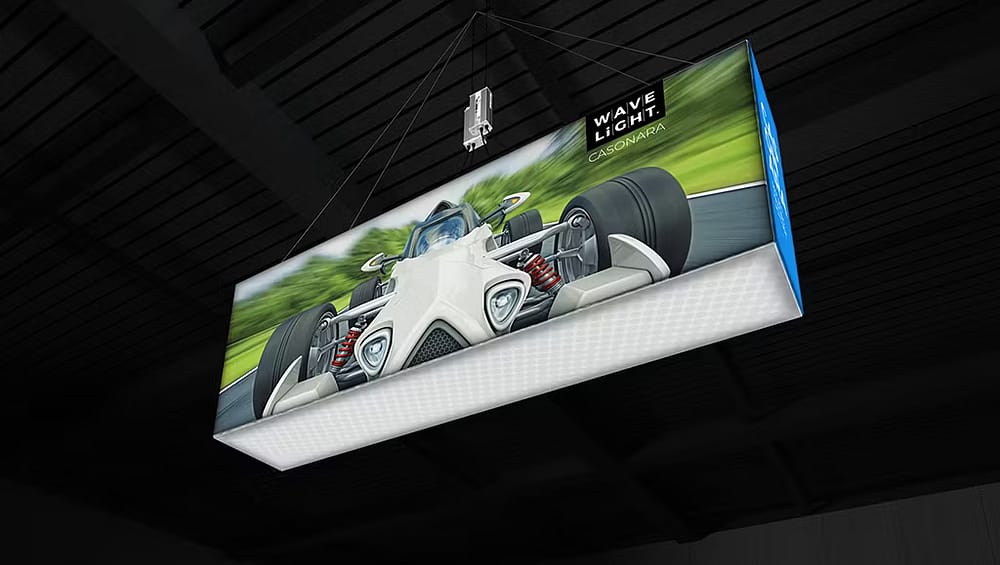
Hanging banners are a high-impact tool for overhead marketing at exhibitions, conferences, and retail events. They provide instant sightlines across crowded aisles, and therefore help attendees locate brands from a distance. For exhibitors who want instant recognition and stronger foot traffic, hanging banners work as a primary visual beacon. Additionally, they complement ground-level signage to create a layered brand presence that guides visitors to your stand.
Specifications and Design Features
Hanging banners come in a range of shapes, sizes, and mounting options to suit different venues. Common specifications include single-sided or double-sided printing, grommet or pole-pocket finishes, and aluminum or PVC support systems. Furthermore, design choices such as tall vertical formats, circular or arrow-shaped banners, and backlit options change how light and distance affect legibility. As a result, you can tailor the banner to match sightline requirements and venue height restrictions.
Material Quality and Durability
Material selection matters because banners face transportation, repeated installations, and venue conditions. Most exhibitors choose durable, tear-resistant fabrics or coated PVC that resist fraying and maintain color fidelity. Moreover, UV-stable inks and matt or satin finishes reduce glare while preserving brand colors. Therefore, investing in quality materials reduces replacement costs and keeps your messaging crisp across multiple events.
Primary Use Cases for Hanging Banners
Hanging banners serve several key functions across event types. First, they act as wayfinding tools to improve visitor navigation and reduce missed opportunities. Second, they function as brand identifiers that reinforce recall when guests scan the hall from afar. Third, they support sponsorship visibility by elevating partner logos above the crowd. Finally, they work well for product zones within large venues, so visitors can find categories quickly and efficiently.
Creative Uses and Product Combinations
Beyond standard applications, hanging banners pair well with other exhibit elements to create dynamic presentations. For example, combine overhead banners with LED-lit stands and floor decals for a cohesive path that leads attendees to demos. Alternatively, use multiple layered banners at different heights to create depth and emphasize hierarchy, and therefore draw attention to key products. For a complete selection of designs and formats, explore our curated range of Hanging banners built for modern exhibition environments.
Portability and Setup Process
Most hanging banners are designed for efficient transport and fast installation. Consequently, they fold compactly and pack into lightweight cases for easy carry. Hardware is typically modular with quick-fit clips and telescopic poles, and therefore setup times drop dramatically with basic training. For large venues, pre-planned rigging points speed installation further, while modular fabric systems allow for rapid replacement of graphics between events.
Advantages in Exhibition Settings and Final Thoughts
In exhibition environments hanging banners maximize visibility, improve brand recall, and streamline visitor flow. They are cost-effective when weighed against the reach they provide, and they scale well from single-day shows to multi-venue roadshows. Overall, exhibitors who prioritize overhead presence gain measurable returns through increased booth visits and clearer brand messaging. In short, hanging banners remain an essential investment for any exhibitor seeking clarity, reach, and long-term value.