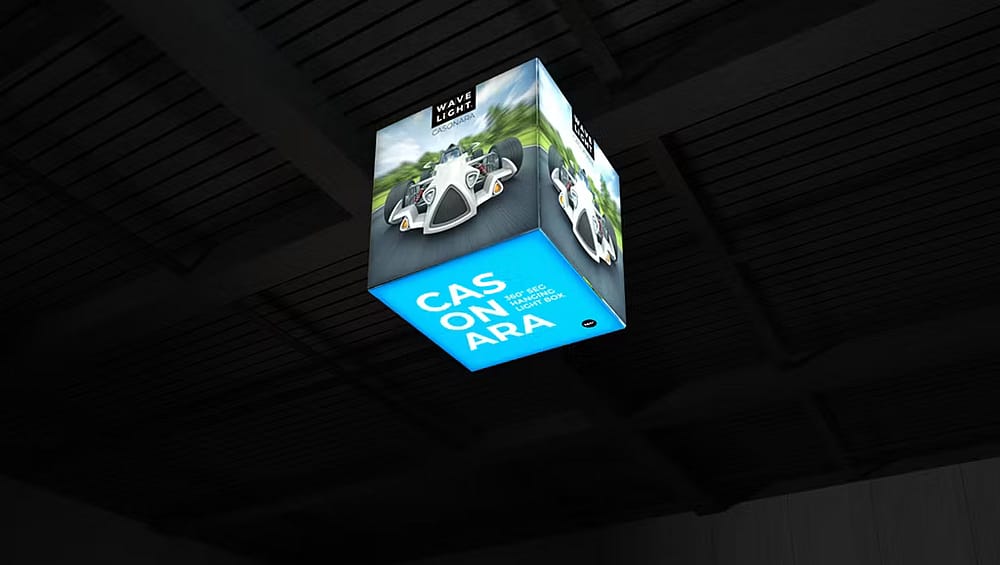
How Hanging Banners Elevate Visibility Across Large Event Halls
General information about hanging banners
Hanging banners are a high-impact signage category designed for large indoor spaces such as exhibition halls, arenas, and convention centers. Because they are suspended above sight lines, they instantly cut through crowded floors, helping brands stand out from a distance. In addition, these banners come in a variety of sizes, shapes, and materials, so you can match aesthetic and functional needs while staying within venue regulations.
Product category advantages in large event settings
Hanging banners deliver superior visibility and directional clarity, and they do so without taking up valuable floor space. Consequently, they improve visitor navigation and reduce visual clutter at busy events. Furthermore, when placed strategically above key aisles or entrances, they act as landmarks that boost brand recall and guide attendees toward your booth or zone.
Use cases of hanging banners at trade shows and conferences
For example, companies use large circular banners to mark main intersections, rectangular banners to announce special zones, and custom-shaped banners to reinforce brand identity. Moreover, event organizers rely on hanging banners to display schedules and zone maps, while exhibitors prefer branded hanging graphics to draw traffic to satellite displays. As a result, hanging banners perform well across booth clusters, product demo areas, and registration points.
Creative uses combining multiple products in the category
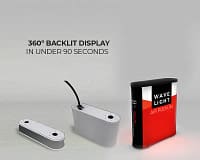
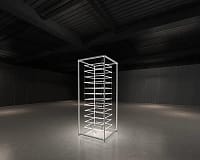
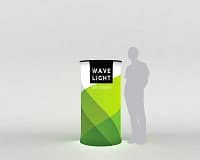
You can combine hanging banners with backlit displays and modular stands for layered messaging. For instance, place a hanging banner above a double-decker stand to increase sight lines, and then use pop-up banners at eye level to communicate product details. Additionally, using repeating motifs across hanging and floor signage creates visual cohesion, and therefore strengthens your overall presence in the hall.
Coordinated zone branding
When several exhibitors share branding, use a series of coordinated hanging banners to define a pavilion. This approach improves wayfinding, and it also enhances the perceived scale of your presence, which can attract larger crowds.
Design and material quality considerations
Select materials with light-weight strength and excellent print fidelity. Common options include PVC, tension fabric, and blockout vinyl, and each has distinct advantages. For example, fabric provides a premium finish and reduces glare, while vinyl offers robust durability for repeated use. In addition, consider edge finishing and grommet placement to simplify rigging and increase wind resistance in indoor drafty environments.
Portability, components, and setup process
Choose banners that pack down compactly and include simple hanging hardware such as reinforced loops, quick-snap connectors, or pole pockets. Furthermore, modular designs reduce freight costs and accelerate installation. For setup, plan rigging points in advance and work with venue riggers, and therefore you will avoid last-minute delays. Lastly, store components in labeled cases to speed future installs.
Practical benefits and return on investment
Hanging banners are cost-effective because they reach large audiences while requiring limited labor and floor real estate. Moreover, long-lasting materials and easy rebranding options mean that a single banner can be repurposed across multiple events, which increases lifetime value and lowers per-event cost.
Final thoughts for strategic use
To support long-term branding goals, explore our catalogue of durable and visually impactful Hanging banners. Ultimately, when you pair the right design, materials, and placement, hanging banners become a central element of event strategy and a reliable tool for boosting visibility in large event halls.