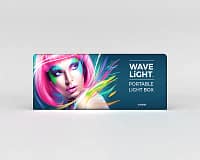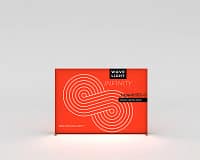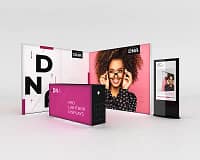
Choosing the wrong WaveLine® Monolith Banner is an easy mistake for UK marketers to make, especially when display hardware is treated as a last-minute purchase. Yet the choice you make here quietly determines how visible, memorable and professional your brand appears in crowded halls. In an era where budgets are under pressure and every event must justify its spend, overlooking banner specification has become a common but costly blind spot.
Recognising the Risks of Choosing the Wrong WaveLine® Monolith Banner
Across trade shows and conferences, exhibitors increasingly rely on tension fabric systems and portable banner stands to act as the spine of their visual presence. However, organisers report recurring issues: stands that disappear behind crowds, unstable bases in busy aisles, and graphics that simply do not hold up under harsh venue lighting. These shortcomings rarely show up in proofs or mock-ups; they only emerge once the doors open and delegates flood the space.
Why the Right Waveline Monolith Banners Choice Matters
Research indicating that most visitors recall stands primarily by their visuals underlines how unforgiving exhibition environments can be. A banner that is too small for a double-height hall, or a frame that leaves fabric sagging, will undermine even the strongest campaign concept. For brands investing heavily in custom fabric displays and premium exhibition banner stands, poor hardware choices effectively tax every lead you generate by reducing impact before a conversation even begins.
Common Warning Signs Your Banner Is Holding You Back
There are clear indicators that your current hardware is not fit for purpose, even if it has survived several seasons. Look for monoliths that cannot be seen above shoulder height once aisles are busy, or fabric that ripples because the graphic and frame have been poorly matched. Glare from spotlights making text unreadable, bases that wobble when brushed by passing bags, and pixelated images at full size all point to a specification that is quietly eroding your event performance.
- Banners that disappear behind crowds when visitor traffic builds up.
- Fabric graphics that crease, sag or pucker once the frame is assembled.
- Colours that shift or wash out under LED or sodium exhibition lighting.
- Hardware that feels unstable compared with other lightweight trade show signage.
- Visuals that looked sharp on screen but turn soft or pixelated at full scale.
Many of these problems originate long before your team reaches the venue. Specifications are often copied from a previous show without checking ceiling heights, sightlines or viewing distances in the new space. Cost-driven decisions can push marketers towards generic UK exhibition display solutions rather than Waveline Monolith Banners engineered for tension, stability and portability. In parallel, rushed artwork sign-off may ignore how designs will behave on reusable illuminated displays or backlit portable display stands.
The consequences of ignoring these issues compound over time. Footfall to the stand drops, photography for case studies and social media looks underwhelming, and marketing teams struggle to prove event ROI. For brands exploring outdoor advertising solutions, illuminated fabric displays or custom SEG banner systems, persisting with mis-specified hardware indoors becomes a structural weakness, not a minor irritation. Before your next major show, audit your current kit, including any portable illuminated banners, and speak with an expert in UK exhibition hardware. Taking time now to review your WaveLine® Monolith Banner specification can prevent another cycle of underperforming events and ensure your display system finally works as hard as the rest of your campaign.